
Is XRP centralized or decentralized? We checked the data
By zerps. Published .
No, XRP is not centralized. The XRP Ledger's default list has 35 validators run by 35 different operators, and Ripple runs one of them. A change to the rules needs 29 of the 35 for two weeks. No validator is paid, XRP has no issuer, and it cannot be frozen. Ripple is the ledger's biggest contributor, with one vote.
You have heard it a hundred times: XRP is centralized, Ripple controls it. It is the oldest line in crypto, and it is usually said without a single number.
So we pulled the numbers. On 27 November 2026 we read the XRP Ledger's own data: who validates, who gets paid, who changes the rules, who can stop it, who can touch your coins, and who writes the code. Then we asked the same of Bitcoin, Ethereum, Solana and BNB Chain.
One thing you should know first. onXRP, the company behind zerps, runs one of the 35 validators this article is about. Nobody tells us how to vote.
- 1 of 35Ripple runs one of the 35 validators on the default list. The other 34 are run by 34 other operators.
- 29 of 35The votes a change to the rules needs, held for two weeks. Ripple has one of them.
- 98 changeshave passed by that vote since 2016. In 2020 one passed while Ripple voted no.
- Nobody is paidNo block reward, no staking, and every fee is destroyed. A vote cannot be bought.
- 20.7 million ledgersclosed between the SEC's lawsuit against Ripple and the court's ruling.
- 3 pools, 2 buildersThree pools mined 62% of Bitcoin's blocks last month. Two builders made 75% of Ethereum's relayed blocks last week.
Is XRP centralized or decentralized?
XRP is decentralized. On 27 November 2026 the XRP Ledger's default list held 35 validators, run by 35 different operators. Ripple ran one. To change a single rule takes 29 of the 35, for two weeks. The ledger's own site says the same: "Ripple runs only 1 of these nodes."
The rest of this article is the proof, question by question. Each figure names its source, and the day it was read. It is long on purpose: every claim you have heard about XRP and control is answered here with a number.
How do you measure whether a network is decentralized?
By asking who holds each kind of power, and counting them. A network is as decentralized as the smallest group that can decide something alone. This article asks six questions of the XRP Ledger, and then the same six of Bitcoin, Ethereum, Solana and BNB Chain.
- Who validates? Who decides which transactions are final.
- Who gets paid? Whether deciding earns money, and so whether it can be bought.
- Who changes the rules? Who can switch on a new feature or change a fee.
- Who can stop it? How few operators it takes to halt the network.
- Who can touch your coins? Whether anyone can freeze them or take them back.
- Who writes the code? Who can propose a change, and who decides if it goes live.
One number sums up the fourth question. The Nakamoto coefficient is the smallest number of independent operators that could stop a network together. The higher it is, the more hands it takes.
How does the XRP Ledger agree without miners?
By a vote among validators that each server chooses to trust. There is no mining and no staking. About every four seconds the validators compare the transactions they have seen, and a new ledger is final once at least 80% of a server's list agrees on it.
The documentation puts the idea in one line: "a little trust goes a long way". Each server picks a set of validators "run by different parties who are expected to behave honestly most of the time". It does not have to trust any one of them. It only has to trust that most of them will not cheat together.
The same page gives the numbers. "As long as fewer than 20% of trusted validators are faulty, consensus can continue unimpeded; and confirming an invalid transaction would require over 80% of trusted validators to collude." Between those two lines the network "stops making progress".
So the ledger stops before it lies. The rules of consensus say it reports a result as reliable only when it is. With 35 validators on the list, that works out as 8 to stop the ledger and 28 to make it say something false.
Who validates the XRP Ledger?
35 validators on the default list decide what is true on the XRP Ledger, and no operator runs two of them. We read the list of validators on 27 November 2026. Six are universities. One is Ripple's. One is ours.
- Six universities, on three continents: Berkeley, North Carolina, Kansas, Waterloo, the Australian National University in Canberra, and Nicosia.
- Exchanges: Bitso, Bitrue and GateHub.
- Builders: the makers of the Xaman wallet, the explorers XRPScan and Bithomp, and a row of independent developers.
- Foundations and networks: the Interledger Foundation and Flare.
- onXRP: the company behind zerps. Our vote is our own.
- Ripple: one.
Behind the 35 stand more. That morning the network showed 133 validators in all, 96 of them with a web address they have proven they own. The 98 that are not on the default list take part too, and anyone can choose to trust them.
The 35 validators on the default list, one by one
Here is every validator on the default list on 27 November 2026, by the web address it has proven it owns. The operator and the country are what each one publishes about itself. The last column is how often it agreed with the network's result over 30 days.
| Validator | Operator | Server country | Agreement, 30 days |
|---|---|---|---|
| arrington-xrp-capital.blockdaemon.com | Blockdaemon, for Arrington XRP Capital | Japan | 99.94% |
| aureusox.com | Aureus Ox, an infrastructure operator | United States | 98.43% |
| bithomp.com | Bithomp, an explorer | Finland | 99.95% |
| bitso.com | Bitso, an exchange | United States | 99.98% |
| cabbit.tech | An independent operator | Canada | 99.99% |
| ekiserrepe.es | Ekiserrepe, an independent developer | Spain | 99.99% |
| gen3labs.xyz | Gen3 Labs | Singapore | 99.97% |
| jon-nilsen.no | An independent operator | Norway | 99.94% |
| katczynski.net | An independent operator | Not published | 99.99% |
| onxrp.com | onXRP, the company behind zerps | Canada | 99.99% |
| peersyst.cloud | Peersyst Technology, a builder | Spain | 99.79% |
| ripple.com | Ripple | United States | 99.99% |
| ripple.ittc.ku.edu | University of Kansas | United States | 99.73% |
| ripple.kenan-flagler.unc.edu | University of North Carolina | United States | 99.84% |
| ripplevalidator.uwaterloo.ca | University of Waterloo | Not published | 99.12% |
| shadow.haas.berkeley.edu | University of California, Berkeley | United States | 99.30% |
| squidrouter.com | Squid, a cross-chain router | Israel | 99.99% |
| tequ.dev | tequ, an independent developer | Finland | 99.98% |
| v2.xrpl-commons.org | A non-profit for the ledger's community | France | 99.90% |
| validator.aspired.nz | An independent operator | New Zealand | 99.56% |
| validator.gatehub.net | GateHub, a wallet and exchange | Belgium | 99.98% |
| validator.xrpl-labs.com | The makers of the Xaman wallet | Netherlands | 99.99% |
| validator.xrpl.robertswarthout.com | An independent operator | United States | 99.98% |
| verum.eminence.im | Eminence | Poland | 90.04% |
| www.bitrue.com | Bitrue, an exchange | Singapore | 99.99% |
| xpmarket.com | XPMarket, a marketplace | Finland | 99.93% |
| xrp-col.anu.edu.au | Australian National University | Australia | 99.66% |
| xrp-validator.interledger.org | Interledger Foundation | Singapore | 97.82% |
| xrp.unic.ac.cy | University of Nicosia | Cyprus | 96.14% |
| xrp.vet | Vet, an independent developer | Germany | 98.62% |
| xrpgoat.com | XrpGoat, an independent operator | United States | 99.99% |
| xrpkuwait.com | XRP Kuwait, a community | Kuwait | 98.85% |
| xrpl-verification.flare.network | Flare | Netherlands | 99.91% |
| xrpl.aesthetes.art | Aesthetes, an art platform | Europe | 98.70% |
| xrpscan.com | XRPScan, an explorer | Finland | 99.98% |
We read the identity file of each of the 35 that day. 33 publish one that carries their validator's key, and 32 name a country for the server: 17 countries, from Norway to New Zealand. No country holds more than 8 of the 35.
They also agree. 28 of the 35 matched the network's result 99% of the time or more over 30 days, and the middle score was 99.94%. A validator that drifts shows up in this column, in public, for every operator and both publishers to see.
Is the XRP Ledger's default list a rule?
No. The list is a recommendation, and every server operator can replace it. The ledger's site puts it plainly: "The XRP Ledger network is opt-in. Each participant directly or indirectly chooses its UNL." UNL is short for unique node list, the technical name for the validators one server trusts.
- Two publishers sign the default. Ripple and the XRP Ledger Foundation each publish a list. We decoded both on 27 November 2026: the same 35.
- Anyone can publish one. The documentation says so: "Anyone can publish a signed list of validators in the correct format."
- The operator sets the bar. Since server version 2.4.0 an operator can require that a validator stands on several publishers' lists before the server uses it.
- The way out is written down. "If Ripple stops operating or acts maliciously, participants can change their UNLs to use a list from a different publisher."
Getting on a list takes time, not money. The usual conditions are a year of high uptime and agreement, a proven web address, and being "a separate and recognizeable entity", not an employee of a company that already runs a validator. The server should also stand somewhere else than most of the others.
There is a reason most servers keep the default. Servers whose lists overlap too little could disagree about what is final, so the documentation asks for lists with "a high degree of overlap". The freedom is real. The network stays in one piece because operators use it with care.
How did Ripple go from every XRP validator to one?
Step by step, in public, and by its own choice. The ledger is older than the company, and the company has handed over one piece of control after another. The record below comes from the ledger's history page, Ripple's own posts and the ledger itself.
| When | What happened |
|---|---|
| 2011 | Three engineers, David Schwartz, Jed McCaleb and Arthur Britto, start building the ledger. They wanted Bitcoin without the mining. |
| June 2012 | The XRP Ledger launches. |
| September 2012 | The company that became Ripple is founded. The founders give it 80 billion XRP. |
| May 2016 | The first change by validator vote goes live, on 19 May. Every change since has needed the same vote. |
| May 2017 | The default list is Ripple's own validators. Ripple promises to remove one of its own for every two outside validators that join. |
| December 2017 | Ripple locks 55 billion XRP in escrows on the ledger. |
| June 2020 | Ripple runs six of the 36 validators on the default list. A change passes while it votes no. |
| September 2020 | The XRP Ledger Foundation is founded. |
| November 2021 | A change goes live that lets the ledger carry on when some validators drop out. |
| July 2023 | Ripple runs one of the 35 validators on the default list. |
| September 2025 | The care of the ledger moves to a new foundation, which signs the default list beside Ripple. |
| November 2026 | 35 validators, 35 operators. Ripple runs one. |
Ripple kept its promise of 2017, and went further than it promised. A company that wanted control would not have given up five of its six validators and shared the signing of the list.
Who gets paid to validate XRP?
Nobody gets paid. The XRP Ledger has no block reward and no staking, and even the fees go to nobody: the documentation says the cost of a transaction "is not paid to any party: the XRP is irrevocably destroyed". A validator earns nothing.
It also costs little. The site compares it to "running an email server". There are no coins to lock up and no licence to buy. The reason to run one, in the site's words, is "to preserve and protect the stable operation and sensible evolution of the network".
That sounds like a weakness. It is the point. In proof of work and proof of stake, validating pays, and where it pays, the biggest operators grow fastest, because they can afford the most machines or the most stake. On the XRP Ledger there is nothing to win, so there is nothing to buy. Ripple holds 36.8 billion XRP. Nobody has more reason to want this ledger to succeed, and it still has one vote, like everyone else.
What does it take to run an XRP validator?
A server, a web address and patience. Anyone can run a validator: there is no fee, no coins to lock and no permission to ask. The recommended machine has 8 processor cores, 64 GB of memory and a fast disk. A Solana validator needs 256 GB of memory or more.
Running one does not give you a say by itself. The guide is clear: "Other servers ignore your validation messages unless they add your validator to their Unique Node List." That is the defence against a flood of fake validators. A vote counts only where somebody chose to trust it.
The guide names four traits of a good validator:
- Available. Always running, voting on every ledger.
- In agreement. Its votes match the network's result, on unchanged software.
- Prompt. Its votes arrive before the round is over.
- Identified. It has an owner you can name.
It also says what a good list looks like: "validators run by different owners in multiple legal jurisdictions and geographic areas". And it gives the validators off the list a job: they "help set the standard that trusted validators are measured against".
Who changes the rules of the XRP Ledger?
The validators do, by vote. A change, called an amendment, switches on only after more than 80% of the trusted validators have backed it for two weeks. With 35 on the list that is 29. Each operator sets its own vote, and Ripple has one.
The operators' votes are their own. The documentation says they "configure their servers to vote on each amendment and can change it at any time". Fees and reserves are set the same way: the network follows the middle value of the validators' votes.
How many changes have passed, year by year?
98 amendments have passed this way since the first one in 2016. The vote has never been busier than in the last two years.
| Year | Amendments switched on |
|---|---|
| 2016 | 5 |
| 2017 | 11 |
| 2018 | 7 |
| 2019 | 4 |
| 2020 | 7 |
| 2021 | 8 |
| 2022 | 3 |
| 2023 | 8 |
| 2024 | 13 |
| 2025 | 17 |
| 2026, to 27 November | 15 |
What is waiting for votes today?
Eleven proposals were collecting votes on the afternoon of 27 November 2026. Each needs 29 of the 35, held for two weeks. Lending crossed that line the same day, at 14:22 UTC.
| Proposal | Votes of 35 | In the software since |
|---|---|---|
| Vaults (SingleAssetVault) | 30. Majority since 25 November, due on 9 December | 3.1.0, January 2026 |
| Lending (LendingProtocol) | 29. Majority since 27 November, due on 11 December | 3.1.0, January 2026 |
| Lending, second part (LendingProtocolV1_1) | 29. Majority since 27 November | 3.4.0 |
| Confidential transfers (ConfidentialTransfer) | 22 | 3.3.0 |
| DynamicMPT | 18 | 3.3.0 |
| Batch | 12 | 2.5.0, June 2025 |
| Sponsor | 11 | 3.3.0 |
| fixBatchInnerSigs | 10 | 3.1.0 |
| fixXChainRewardRounding | 10 | 2.2.0 |
| Cross-chain bridge (XChainBridge) | 4 | 2.0.0, January 2024 |
| PermissionDelegation | 1 | 2.5.0, June 2025 |
Read the lower rows. The cross-chain bridge was proposed by Ripple's engineers and has been in the software since January 2024. Nearly three years on it has 4 votes of 35. Batch, also from Ripple's engineers, has waited since June 2025 with 12. Ripple writes, proposes and waits, like everyone else. Writing the code does not pass it.
The waiting is also a safety net. In September 2025 a flaw was found in a feature while it was still collecting votes. Validators were advised to vote against it, and it never went live in that form.
Seven examples: when the validators decided
The vote is real, and the record shows it. In each of these seven cases the validators decided, and Ripple was one voice among them.
| Year | What happened |
|---|---|
| 2020 | Validators switched on a feature called Checks. Ripple voted no. It passed anyway, on 18 June 2020, and the ledger has run it since. |
| 2021 | The validators voted the account reserve down from 20 XRP to 10. |
| 2022 | The NFT upgrade, proposed by Ripple, had its majority and was expected on 13 September. A flaw was found and it lost its majority. A fix was voted in on 27 October, and NFTs went live on 31 October. |
| 2024 | The reserve was cut again, from 10 XRP to 1, "by the collective voting of the validators". |
| 2025 | A feature proposed by one developer outside Ripple, who also runs a validator on the list, went live on 15 February. |
| 2024 to 2026 | Ripple's cross-chain bridge has waited almost three years for votes, and has 4 of 35. |
| 2026 | Ripple's engineers proposed lending, vaults and confidential transfers. Each waits for the vote like any other proposal. Vaults won their majority after ten months, on 25 November. Lending followed on 27 November. Confidential transfers have 22 of 35. |
That last row is the whole design in one line. Ripple writes code for the ledger, like every other developer who contributes to it. The validators decide what goes live. That is not control. It is contribution.
Who can stop the XRP Ledger, or touch your XRP?
Nobody alone. A ledger is final once 80% of the list agrees, so it takes 8 of the 35 to stop the ledger and 28 to make it say something false. And nobody can touch your XRP: it has no issuer, so it cannot be frozen or taken back.
- It keeps going. A new ledger closes about every four seconds: 108 million so far. If validators drop out, the rest carry on.
- It cannot be made to lie quietly. To confirm a false transaction, the documentation says, would take "at least 80% of trusted validators" working together.
- Nobody can print more. All 100 billion XRP were created at the start, and the supply only shrinks.
- No place in line for sale. Every server puts transactions in the same fixed order, built "to prevent participants from competing over transaction ordering".
Even the exchange is part of the ledger. It has run since 2012, and no company can switch it off.
Has the XRP Ledger ever stopped?
It has paused twice, and it has never lost or rewritten a ledger. The longer pause was on 4 February 2025: 64 minutes, and then it carried on from the same ledger. We measured it on the ledger itself. Ledger 93,927,174 closed at 21:54:21 UTC. The next one, 93,927,175, closed at 22:58:20 UTC. That is 63 minutes and 59 seconds.
The second ledger names the first as its parent, by its fingerprint. So the chain is whole. Not one ledger was lost, and not one was rewritten.
The pause is the design doing its job. When too few validators agree, the servers stop declaring ledgers final. The documentation calls it "a design choice to ensure that no transactions' outcomes can be changed after they are declared final". The ledger chose to wait, and then it went on.
It was the second pause on record. On 25 November 2024 several servers crashed at once, and the network stopped processing transactions "for approximately 10 minutes". No funds were lost either time.
And one attack shows the other side. On 30 July 2026 a flood of messages cut many servers off from the network, among them the validators of Ripple and XRPScan. The report says the ledger "never halted or forked, and the remaining UNL validators maintained consensus throughout". Ripple's own validator dropped out, and the ledger went on without it.
Did the XRP Ledger need Ripple during the SEC case?
No. The SEC sued Ripple on 22 December 2020, and the court ruled on 13 July 2023. We counted the ledgers closed between those two days: 20,725,885 in 933 days, one every 3.9 seconds. The company spent those years in court, and the ledger kept its pace.
In that same period the validators switched on 12 amendments and cut the account reserve in half. The ruling itself said XRP, as a digital token, "is not in and of itself" an investment contract.
That is what decentralized means in practice. The best-known company on a network was tied up for two and a half years, and the network did not notice.
Does Ripple own most of the XRP?
No. Ripple held 36.8 billion XRP on 30 September 2026, of a supply just under 100 billion. 31.7 billion of that is locked in escrow on the ledger, and 63.2 billion XRP has been distributed. And on the XRP Ledger, holding XRP gives no vote.
- Where it came from. There were 100 billion XRP when the ledger was created. In September 2012 the founders gave 80 billion to the company "in exchange for Ripple developing on the XRP Ledger".
- How it is locked. In December 2017 Ripple locked 55 billion XRP in escrows that release at most one billion a month. "These escrows are on the ledger itself and the ledger mechanics, enforced by consensus, control the release of the XRP."
- What it cannot do. The consensus is not proof of stake. On Ethereum, Solana and BNB Chain, coins are votes. Here 36.8 billion XRP weigh the same as a university's validator: one vote.
- The supply shrinks. On 27 November 2026 the ledger counted just over 99,985,533,000 XRP. About 14.5 million have been destroyed as fees since 2012, and nobody can make new ones.
So even the lock on Ripple's XRP is kept by the ledger's rules, and the validators enforce those rules.
Who writes the code of the XRP Ledger?
Many people do, and Ripple's engineers most of all. The code is open, under a free licence, and GitHub counts 211 contributors and 1,752 copies made by other developers. Ripple is the biggest contributor, and far from the only one.
The proposals are public too. On 27 November 2026 the standards repository held 81 documents. 30 of them name an author with a Ripple address. The others are signed by wallet makers, independent developers and validator operators, and by some Ripple engineers under their own names.
The makers of Xaman write standards for it. So do independent developers, and validators themselves. Two upgrades that passed in 2025 were written or co-written by people who run validators on the default list, one of them alone. Since 2025 a new foundation is the ledger's steward.
The ledger's site sums it up in one sentence: Ripple "is a contributor to the network, but its rights are the same as those of other contributors".
Where do the XRP Ledger's servers run?
Around the world, on machines nobody had to ask permission to start. On the morning of 27 November 2026 the network showed 891 servers. 116 of them show where they are: 18 countries and territories, led by the United States with 38, Finland with 13, Germany with 12 and Singapore with 11.
The validators' own files add six countries that the server count does not show: Norway, Spain, Poland, Australia, Cyprus and Israel. Together that makes at least 24 countries and territories. The real number is higher, because 775 servers do not say where they are.
Any of these servers can check every transaction for itself. A server follows the rules it runs, not the word of a validator, and it takes a ledger as final only when its own list agrees.
How do Bitcoin, Ethereum, Solana and BNB Chain compare with XRP?
Each is open in its own way, and each has a small group that does most of the work. We asked the same questions of all five on 27 November 2026, at their own sources. The short version is in this table, and each chain has its own section below.
| Chain | What the data shows |
|---|---|
| Bitcoin | Three pools mined 62% of the blocks in the past month. Two of them mined 45%. |
| Ethereum | One builder made 55% of relayed blocks in the past week, and two made 75%. Three names hold 44% of staked ETH. |
| Solana | 654 validators voted that morning, down from 2,560 at the 2023 peak. 18 of them hold over a third of the stake. It stopped seven times from 2020 to 2024, for about 68 hours. |
| BNB Chain | 21 validators write the blocks, picked from the 45 with the most stake. Seven hold over a third. |
| XRP Ledger | 35 named validators, one vote each, none of them paid. 29 to change a rule. Ripple has one. |
The measures differ, because the designs differ. A pool or a builder makes blocks, and a validator on the XRP Ledger votes. But the question behind them is the same: how few hands does it take? On the XRP Ledger a vote cannot be bought with coins or machines, and that is what keeps the count honest.
Bitcoin against XRP: who mines the blocks?
Mostly three pools. Bitcoin is open to any miner, and miners join pools to share the reward. In the month to 27 November 2026, 4,409 blocks were mined. Foundry USA made 25.2% of them, AntPool 20.4% and F2Pool 16.9%. That is 62.5% from three pools, and 45.5% from two.
It is not a bad month. Over the past year the same three pools mined 59% of 52,400 blocks. A pool decides which transactions go into its blocks. The miners behind it can move to another pool, and that is Bitcoin's safeguard.
The XRP Ledger was built with this in mind. Its history page says the founders saw in 2011 that problems could arise if miners together held more than half of the mining power. Their answer was a ledger with no mining at all.
Ethereum against XRP: who builds the blocks and holds the stake?
A handful of names, on both counts. On Ethereum stake is what counts, and stake is pooled. Blocks are mostly put together by specialist builders. On the past week's figures, two of them built three of every four relayed blocks.
- The stake. On 30 June 2026 Lido held 21.2% of staked ETH, Bitmine 11.5%, Coinbase 10.9% and Binance 7.9%. The first three hold 43.6%, more than the third that can stop the chain from becoming final.
- The builders. In the seven days to 27 November 2026, one builder made 55.1% of the blocks delivered by relays and a second made 19.9%. Three relays carried 87%.
- The entry price. A validator needs 32 ETH. More ETH means more validators and more say.
- The fork. In 2016, after a hack, a fork moved 3.6 million ETH out of the hacked contract. The old chain lives on as Ethereum Classic.
- The second layers. Base, the largest, secured 14 billion dollars that day. Its page says "contracts are instantly upgradable" and "Upgrades need to be approved by 2 parties". L2BEAT lists 90 second layers and grades 24 of them. 3 hold its top grade.
Solana against XRP: how many validators, and how often has it stopped?
654 validators voted on the morning of 27 November 2026, by Solana's own public server. At the peak in March 2023 there were 2,560. Stake decides: 18 validators hold more than a third of it, enough to stop the chain, and 76 hold more than two thirds.
Validating costs money there. Voting alone "can cost up to 1.1 SOL per day", and the machine needs 256 GB of memory or more. Cointelegraph reported in January 2026 that rising costs were pushing smaller operators offline.
Solana has also stopped outright. Helius, a company that builds on Solana, keeps the record: seven outages, about 68 hours in all.
| When | How long it stopped |
|---|---|
| December 2020 | About 6 hours |
| September 2021 | 17 hours |
| April and May 2022 | 8 hours |
| June 2022 | 4.5 hours |
| September 2022 | 8.5 hours |
| February 2023 | Almost 19 hours |
| February 2024 | Almost 5 hours |
The XRP Ledger's two pauses add up to about 74 minutes.
BNB Chain and Tron against XRP: how many validators write the blocks?
21 on BNB Chain and 27 on Tron. On BNB Chain the 21 are picked for each period from the 45 validators with the most stake. On 27 November 2026 seven of them held more than a third of the stake, ten held 46.7%, and the 21 held 85.9%.
The chain has been switched off by asking around. After a hack in October 2022, BNB Chain wrote: "Decentralized chains are not designed to be stopped, but by contacting community validators one by one, we were able to stop the incident from spreading." It had 26 active validators at the time.
Tron works the same way with a fixed number. Its documentation describes 27 block producers, elected by the votes of those who stake.
The same questions, side by side
Put next to each other, the difference is not the number of validators. It is what a vote is made of. On four of these chains a vote is money, in machines or in coins. On the XRP Ledger it is a name on a list.
| Question | XRP Ledger | Bitcoin | Ethereum | Solana | BNB Chain |
|---|---|---|---|---|---|
| Who decides what is final? | 35 validators on the default list | Miners, through pools | Stakers. Builders make most blocks | 654 validators, by stake | 21 of 45, by stake |
| Is it paid? | No | Yes | Yes | Yes | Yes |
| What gives more say? | Nothing. One vote each | More machines | More ETH | More SOL | More BNB |
| What does taking part cost? | A server | Mining machines and power | 32 ETH for each validator | Up to 1.1 SOL a day, and 256 GB of memory | Enough stake for the top 45 |
| How concentrated is it? | No operator has two of the 35 | 3 pools, 62% of blocks | 3 names, 44% of stake. 2 builders, 75% of relayed blocks | 18 hold over a third of stake | 7 hold over a third of stake |
Where the XRP Ledger has limits
No network is finished, and this one has soft spots. They do not change the count, and you should know them.
- One main software. All 35 validators ran the same version of the same server software that day. A fault in it reaches everyone at once.
- One popular list. Any server can pick its own list, and most use the default. The documentation says it itself: publishers "wield significant power in selecting which validators are widely trusted".
- Eight can pause it. If 8 of the 35 go offline together, the ledger waits. It cannot be made to lie that way, only to stop.
- It has paused twice. For about 10 minutes in November 2024, and for 64 minutes in February 2025.
- The earliest ledgers are missing. The first 32,569 ledgers of 2012 were lost early on. The record starts at ledger 32,570, closed on 1 January 2013.
How can you check that XRP is decentralized yourself?
In a few minutes, without trusting us or Ripple. Everything in this article is public, and most of it is on the ledger.
- The validators. XRPScan and the ledger's own explorer show all of them, with the list each is on and its agreement score.
- The two lists. Ripple's and the Foundation's are files anyone can download and decode.
- The votes. The amendment page shows every proposal, who backs it today, and the day each past one went live.
- The identity files. Each validator's web address serves a small file, at the path /.well-known/xrp-ledger.toml, with its key, its owner and its country.
- The code. The server's source and every proposal are open on GitHub.
So is XRP centralized?
No. XRP is not centralized, and you do not have to take anyone's word for it. Count the votes: 35 validators, 35 operators, 29 to change a rule, and one of them Ripple's.
For you as a holder there is nothing to do. Your XRP has no issuer, nobody can freeze it, and no single company decides what the ledger does next. If you want to check, the list is public. Ours is on it.
The bottom line
"Ripple controls XRP" is not an opinion you have to argue about. It is a number you can check: one validator of 35, one vote of 35, and 29 needed to change a rule.
Ripple is the XRP Ledger's biggest contributor, and it is a contributor. It writes code like every other developer does, puts it to the vote, and waits. The validators decide what goes live.
Ripple has one of 35. So do we. XRP is not centralized. Count the votes.
- 35 validators on the default list, 35 different operators. Ripple runs one, and so does onXRP.
- The list is a recommendation. Any server can use another one, and two publishers sign the default.
- A change needs 29 of the 35 for two weeks. 98 have passed since 2016.
- No validator is paid, so there is nothing to buy. XRP has no issuer and cannot be frozen.
- Bitcoin's blocks come mostly from three pools, Ethereum's from two builders. Solana has stopped for about 68 hours in all.
The terms, in plain words
- Validator
- A server that takes part in agreeing on each new version of the XRP Ledger, and that votes on changes to its rules.
- Default list
- The list of validators a server trusts unless its operator chooses another. Its technical name is the default UNL.
- Amendment
- A change to the rules of the XRP Ledger. It switches on only after more than 80% of the trusted validators have backed it for two weeks.
- Mining pool
- A group of Bitcoin miners that works as one and shares the reward. The pool decides what goes into its blocks.
- Block builder
- On Ethereum, a company that puts a block together and sells it to the validator whose turn it is.
- Stake
- Coins locked up to take part in validating a chain. On a staking chain, more coins mean more say.
- Second layer
- A network that runs on top of another chain and settles there. Base is one on Ethereum.
- Unique node list
- The validators one server trusts, often shortened to UNL. Each operator chooses its own, and most use the default list.
- Quorum
- The share of a server's list that has to agree before a ledger is final: 80%.
- Publisher
- Whoever signs and publishes a recommended list of validators. The default settings name two: Ripple and the XRP Ledger Foundation.
- Escrow
- XRP locked on the ledger until a set date. The ledger's rules release it, not the owner.
- Nakamoto coefficient
- The smallest number of independent operators that could stop a network together.
- Proof of stake
- A design where validators lock up coins, and more coins give more say. The XRP Ledger does not use it.
Questions and answers
Is XRP centralized?
No. 35 validators on the default list are run by 35 different operators, a change needs 29 of them, and Ripple runs one.
Is XRP decentralized?
Yes. The XRP Ledger's own site calls it "a decentralized, public blockchain", and the data agrees: no operator runs more than one of the 35 validators on the default list.
Does Ripple control XRP?
No. The ledger's own site says Ripple "is a contributor to the network, but its rights are the same as those of other contributors". It runs one validator of 35.
How many XRP validators does Ripple run?
One of the 35 on the default list. In 2017 the default list was all Ripple's own, and in 2020 it ran six of 36.
Who picks the XRP Ledger's validators?
Each server operator does. Most use the default list, which two publishers sign: Ripple and the XRP Ledger Foundation. Any server can use another list.
Can Ripple freeze or take back XRP?
No. XRP has no issuer, so nobody can freeze it or take it back. Tokens issued on the ledger are different: their issuers can.
Does Ripple's escrow make XRP centralized?
No. Ripple held 36.8 billion XRP on 30 September 2026, most of it in escrow. On the XRP Ledger, holding XRP gives no vote. The consensus is not proof of stake: one validator has one vote, whatever it owns.
What is XRP's Nakamoto coefficient?
By the usual measure, the number of independent operators it takes to stop a network, it is 8 of the 35 on the default list. To validate something false would take 28.
Has the XRP Ledger ever stopped?
It has paused twice: for about 10 minutes on 25 November 2024 and for 64 minutes on 4 February 2025. Each time it carried on from the same ledger. No ledger was lost or rewritten.
What blockchain is XRP under?
Its own. XRP is the native asset of the XRP Ledger, which launched in June 2012. It does not run on another chain.
Is XRP more decentralized than Bitcoin?
They are built differently. Bitcoin is open to any miner, and three pools mined 62% of its blocks in the past month. The XRP Ledger has 35 named validators with one vote each, and none is paid.
How many validators does the XRP Ledger have?
On 27 November 2026 the network showed 133 validators. 35 of them are on the default list, which is the set most servers trust.
Who are the XRP validators?
The 35 on the default list include six universities, the exchanges Bitso, Bitrue and GateHub, the explorers XRPScan and Bithomp, the makers of Xaman, the Interledger Foundation, Flare, independent developers, onXRP and Ripple. The article lists all 35.
Do XRP validators get paid?
No. There is no block reward and no staking on the XRP Ledger, and transaction fees are destroyed. A validator earns nothing.
Can anyone run an XRP validator?
Yes. It takes a server and no fee, no coins and no permission. Other servers count its votes only once they choose to trust it.
How does a validator get on the default list?
By running reliably for about a year, proving its web address, and being an operator that does not already run one. The publishers of the list decide.
What is the UNL in XRP?
The unique node list: the validators one server trusts to agree on each ledger. Each operator chooses its own, and most use the default list of 35.
How many validators does it take to change the XRP Ledger?
29 of the 35 on the default list, which is more than 80%, and they have to hold that for two weeks.
What happens if Ripple disappears?
The ledger carries on. Ripple runs one validator of 35, and the ledger needs 28 to agree. From 2020 to 2023, while Ripple was in court, it closed 20.7 million ledgers.
Does Ripple own most of the XRP?
No. Ripple held 36.8 billion XRP on 30 September 2026, about 37% of the supply, and 31.7 billion of that is locked in escrow on the ledger.
Can Ripple create more XRP?
No. All 100 billion XRP were created when the ledger started. Nobody can make more, and every transaction fee destroys a little.
Is XRP proof of stake or proof of work?
Neither. The XRP Ledger uses its own consensus: validators vote, one vote each, and a ledger is final when 80% of a server's list agrees.
Is XRP more decentralized than Ethereum?
They are built differently. On Ethereum, stake is the vote, and three names hold 44% of staked ETH. On the XRP Ledger no operator runs more than one of the 35 validators on the default list.
Is XRP more decentralized than Solana?
By the count of who can stop it, 8 operators on the XRP Ledger against 18 validators by stake on Solana. Solana has stopped seven times for about 68 hours, and the XRP Ledger has paused twice for about 74 minutes.
Who created the XRP Ledger?
Three engineers: David Schwartz, Jed McCaleb and Arthur Britto. They started in 2011, and the ledger launched in June 2012, before the company that became Ripple was founded.
Where can I see the XRP validators?
On XRPScan and on the ledger's own explorer. Both show every validator, the list it is on and how often it agrees with the network.
What we checked ourselves
- We read the ledger's own list of validators on 27 November 2026, and decoded both published lists: the same 35 validators, 35 different operators, one of them Ripple and one of them us.
- We read the identity file each of the 35 validators publishes: 33 carry the validator's key, and 32 name a country, 17 countries in all.
- We measured the pause of February 2025 on the ledger: 63 minutes 59 seconds, and the next ledger builds on the one before.
- We counted the ledgers closed from the SEC's lawsuit to the ruling: 20,725,885, one every 3.9 seconds.
How every article is made: who writes these, and how
Sources
- XRP Ledger: frequently asked questions. Read 27 November 2026.
- XRP Ledger: history. Read 27 November 2026.
- XRPScan: validators on the XRP Ledger. The list and its operators were read from the ledger's validator service on 27 November 2026.
- XRP Ledger: Default UNL Migration, 18 September 2025. Read 27 November 2026.
- Ripple: How We Are Further Decentralizing the XRP Ledger, 11 May 2017. Read 27 November 2026.
- XRP Ledger documentation: Amendments. The 80% and two-week rule.
- XRPScan: amendments. 98 enabled of 113 known, and the day's votes, on 27 November 2026.
- The Daily Hodl: validators adopt Checks without support from Ripple, 5 June 2020. A news report. The ledger shows Checks enabled on 18 June 2020.
- XRP Ledger: Lower Reserves Are Now In Effect, 2021. Read 27 November 2026.
- XRP Ledger: Get Ready for NFTs, 1 September 2022. Read 27 November 2026.
- XRP Ledger: Lower Reserves Are In Effect, 12 December 2024. Read 27 November 2026.
- XRP Ledger documentation: Transaction Cost. Fees are destroyed.
- XRP Ledger documentation: Negative UNL, with the quorum. Read 27 November 2026.
- XRP Ledger documentation: Consensus Structure. The fixed order of transactions.
- XRP Ledger documentation: Freezing Tokens. XRP cannot be frozen.
- Skadden: SEC v. Ripple Labs, the ruling of 13 July 2023. The court's words, as the law firm quotes them.
- The XRP Ledger's server code on GitHub. 211 contributors by GitHub's count on 27 November 2026.
- XLS-52: NFTokenMintOffer. A standard written outside Ripple, enabled in February 2025.
- Ripple: XRP, with the count of the XRP it holds. As of 30 September 2026.
- mempool.space: Bitcoin mining pools. Past month, read 27 November 2026.
- relayscan.io: Ethereum relays and builders. Past seven days, read 27 November 2026.
- Lido: report on the first half of 2026. Shares of staked ETH on 30 June 2026.
- ethereum.org: the history of Ethereum, with the DAO fork. Read 27 November 2026.
- L2BEAT: Base. Read 27 November 2026.
- Anza: requirements for a Solana validator. Read 27 November 2026.
- Cointelegraph: Solana's validator count since its 2023 peak. Our own count of 27 November 2026 is from Solana's public server.
- Helius: a complete history of Solana's outages. Seven outages, read 27 November 2026.
- BNB Chain documentation: validators. Read 27 November 2026.
- BNB Chain: Ecosystem Update, October 2022. Read 27 November 2026.
- XRP Ledger documentation: the consensus protocol. Read 27 November 2026.
- XRP Ledger documentation: Consensus Principles and Rules. Read 27 November 2026.
- XRP Ledger documentation: Consensus Protections. Read 27 November 2026.
- XRP Ledger documentation: Unique Node List. Who can publish a list, and how a validator gets on one.
- XRP Ledger documentation: Configure Validator List Threshold. Read 27 November 2026.
- XRP Ledger documentation: Run a validator. The traits of a good validator.
- XRP Ledger documentation: System Requirements. Read 27 November 2026.
- XRP Ledger documentation: Fee Voting. Read 27 November 2026.
- XRP Ledger: known amendments. The fix that came before NFTs in 2022.
- The XRP Ledger's FAQ as archived on 11 July 2021. "Ripple runs 6 of these nodes."
- XRP Ledger documentation: What is XRP?. The 100 billion XRP and the 80 billion given to the company.
- XRP Ledger: An Explanation of Ripple's XRP Escrow, 15 December 2017. Read 27 November 2026.
- XRP Ledger: report on the pause of 25 November 2024. Read 27 November 2026.
- XRP Ledger: report on the flaw found during voting, September 2025. Read 27 November 2026.
- XRP Ledger: report on the flood of 30 July 2026. Read 27 November 2026.
- The XRP Ledger's standards on GitHub. 81 documents on 27 November 2026.
- The XRP Ledger's own explorer: validators. Read 27 November 2026.
- ethereum.org: staking. The 32 ETH a validator needs.
- L2BEAT: second layers. 90 listed, 24 graded, 3 at the top grade on 27 November 2026.
- Tron documentation: Super Representatives. Read 27 November 2026.
- The default list as Ripple publishes it. Decoded 27 November 2026: 35 validators. The copy archived in June 2020 holds 36.
- The default list as the XRP Ledger Foundation publishes it. Decoded 27 November 2026: the same 35.
This article explains how a technology works. It is not financial advice and not a recommendation to buy, sell or hold anything. Trading tokens carries risk, including total loss: read the risk disclosure.
 Explainer · 25 Nov 2026 · 9 min read
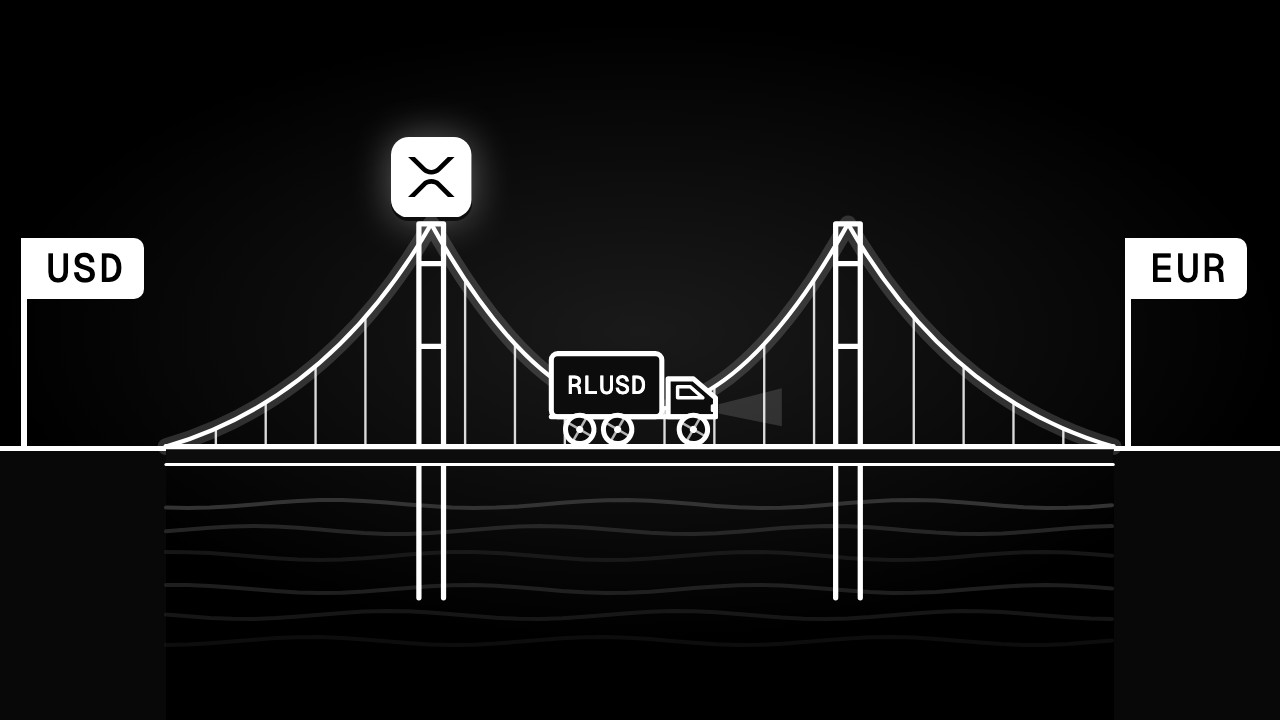
Will RLUSD replace XRP? Why RLUSD needs XRP
Ripple's dollar passed 2.8 billion, and people ask if XRP is still needed. On the XRP Ledger RLUSD cannot exist or move without XRP. The proof.
Read it →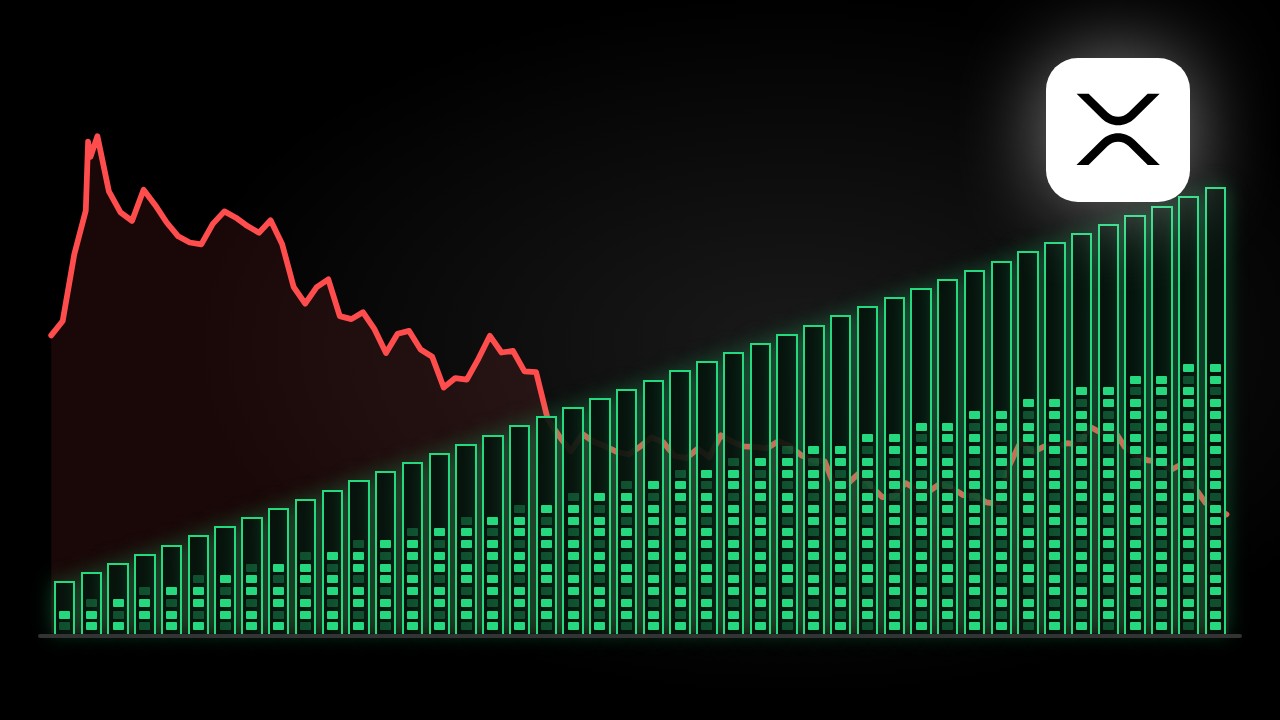 Explainer · 24 Nov 2026 · 11 min read
Does XRP have a future? The top vs now, in numbers
XRP fell three quarters from its 2025 high. In the same sixteen months: a commodity ruling, five spot ETFs, 21 amendments. The full comparison.
Read it →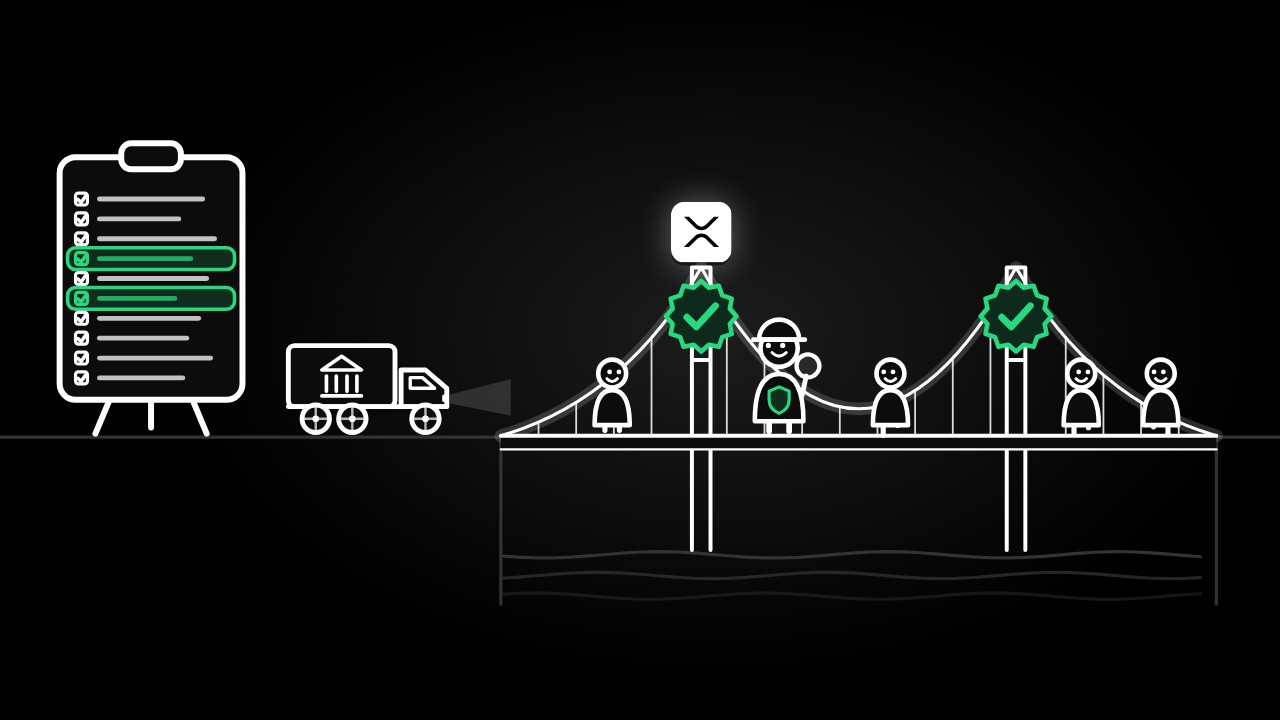 Explainer · 23 Nov 2026 · 10 min read
XRP and GL1: what the banks' checklist means
The XRP Ledger was assessed against GL1, the big banks' checklist for ledgers, and an outside firm checked two of its ten parts. What that means.
Read it →